Products
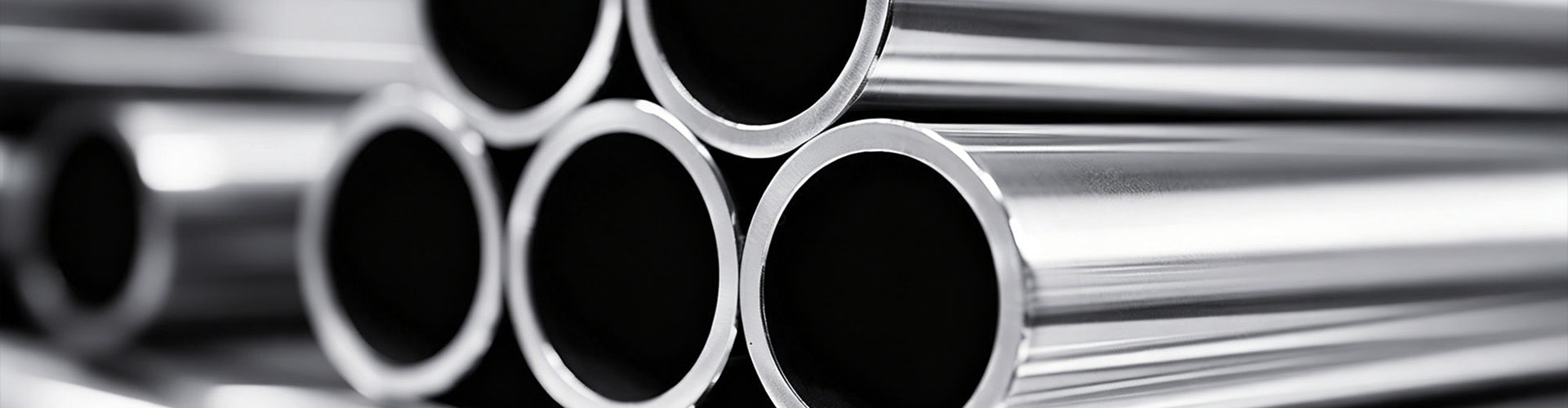
Leading Special Shaped Stainless Steel Seamless Tube Manufacturer
As a professional manufacturer in China, JILAIDA would like to provide you high quality Special Shaped Stainless Steel Seamless Tube, whcih is produced by the same hot extrusion process as round seamless pipe, but with a die and mandrel geometry that forms a non-circular cross-section in a single pass. The metal flows plastically into the shaped gap, taking on square, rectangular, hexagonal, elliptical, L-profile, T-profile, or fully custom geometries. Because the entire cross-section is formed in one compression stroke, the wall is continuous - no weld, no seam, no joint to weaken or inspect.
Why a Tube Is Not Always Round
A round pipe is the default because a circle is the shape that resists internal pressure most efficiently. But not every tube carries pressure. Some carry coolant across a server rack. Some serve as a structural member where flat mounting surfaces matter. Some replace a machined component where the cross-section must match a housing or a flow channel. In each of these cases, the buyer does not need a round tube - they need a shape, and they need it seamless because a weld seam on a non-round profile is even harder to inspect and more likely to fail than on a circular pipe.
JILAIDA operates extrusion tooling for standard and custom profiles in 304, 316, 310S, 2205, and high-nickel austenitic grades. The factory-direct relationship matters here more than for round pipe, because a custom profile often requires new die fabrication - and the buyer needs to talk to the people who actually design and machine the die, not a trading company relaying messages.
Shapes and Where They Come From
The table below is not a catalog of everything we have ever produced. It is a map of the profile families that recur in our production schedule, organized by the application logic that drives each shape.
|
Profile |
Typical Grades |
Wall Configuration |
What the Shape Achieves |
|
Square (equal wall) |
304, 316, 2205 |
3-8 mm all sides |
Architectural, structural, equipment framing |
|
Rectangular (equal wall) |
304, 316 |
3-6 mm |
Cable trays, conduit, heat exchanger shrouds |
|
Square (unequal wall) |
304, 316 |
3.3 mm x 3 sides + 13 mm base |
AI data center liquid cooling - direct-to-chip cold plates |
|
Hexagonal |
316, 2205 |
4-8 mm |
Fastener stock, sensor housings, rotary seals |
|
Elliptical |
304, 316 |
2-5 mm |
Low-profile fluid lines, medical gas routing |
|
L-profile |
316L, 2205 |
4-10 mm |
Corner reinforcement, bracket, structural angle replacement |
|
T-profile |
304, 316 |
4-8 mm |
Partition, divider, support rail in tank internals |
|
Custom (to drawing) |
Any extrudable grade |
Per spec |
Buyer-defined geometry for proprietary equipment |
The equal-wall square and rectangular profiles are the most straightforward - the die gap is uniform around the perimeter, and the metal flows symmetrically. Unequal-wall profiles are more demanding. When one wall is significantly thicker than the others - the 13mm base versus 3.3mm sides in the AI cooling tube - the metal must fill a deeper cavity on one side while maintaining a thinner wall elsewhere. This requires careful die design and preheat temperature distribution to prevent incomplete filling or tearing at the thin-wall transition.
The AI Data Center Cooling Application
The demand for special shaped stainless steel seamless tube changed character in 2023. Before that, custom profiles were niche orders for equipment manufacturers - a pump housing here, a sensor bracket there. Then AI happened.
A modern AI training cluster draws 130 to 250 kW per rack, and the power density is rising. Air cooling cannot keep up. Liquid cooling is no longer optional - it is the only thermal management strategy that scales to gigawatt-scale AI campuses. The coolant delivery tube that runs from the CDU (coolant distribution unit) to the cold plate on each GPU must be leak-free, corrosion-resistant, and geometrically precise. A leak inside a server rack full of GPUs is not a maintenance event - it is a capital loss.
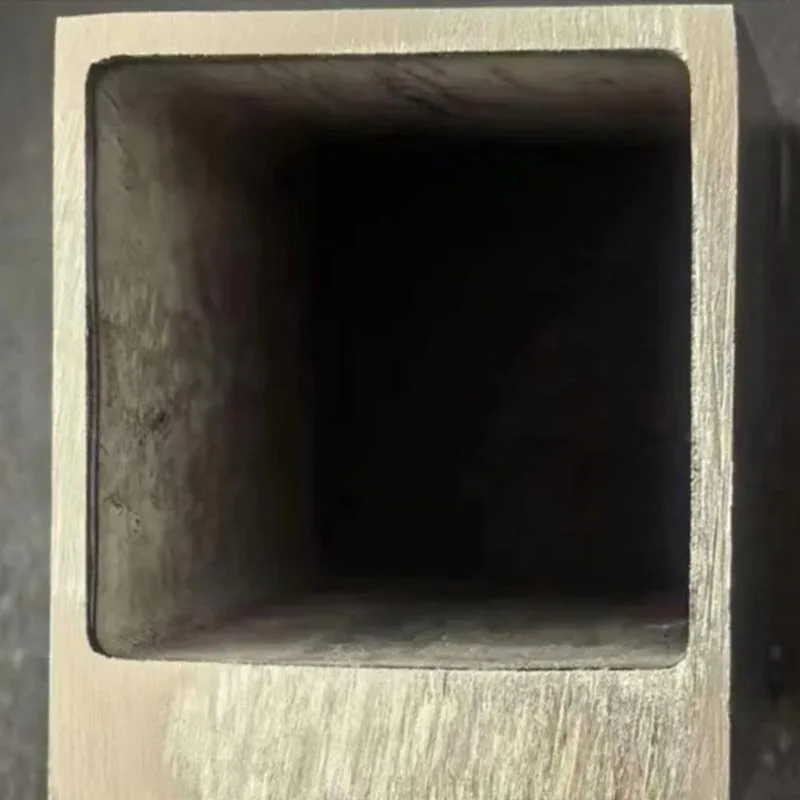
This is where the unequal-wall square tube comes in. The cold plate that sits directly on the GPU die needs a flat, thick base for thermal contact and thin sidewalls for weight and flow optimization. Our standard production profile for this application is 3.3mm on three sides and 13mm on the base, extruded in 304 or 316 seamless. The thick base provides the thermal mass and mounting surface; the thin sides reduce weight and allow the tube to be clamped into the rack structure. A welded equivalent would have a seam along the base - exactly where the thermal contact occurs and exactly where a leak would be catastrophic.
For the CDU-to-rack distribution manifold, we supply rectangular seamless tube in 304 and 316 that routes coolant through the rack aisles. These are larger profiles, typically 50mm x 25mm with 3mm wall, carrying chilled water or a glycol mixture at 0.3 to 0.8 bar. The seamless construction eliminates the risk of seam weeping under long-term vibration from pump cycling.
For hyperscale deployments, the buyer is typically a data center EPC or a liquid cooling system integrator, not the server manufacturer. They specify the profile geometry, the grade, the internal surface roughness (Ra below 1.6 micrometers for coolant cleanliness), and the length. The RFQ often includes a drawing with tolerances of plus or minus 0.1mm on critical dimensions. China manufacturer Jiangsu Ji Lai Da Nickel-Based Alloy Co., Ltd. produces to drawing and ships with a dimensional inspection report that maps every specified dimension.
Other Applications That Drive Custom Profiles
Beyond AI cooling, the special shaped stainless steel seamless tube serves applications where the cross-section must do mechanical work, not just contain fluid:
Hexagonal tube for fastener and sensor applications. The six flat surfaces provide wrenching flats or mounting planes. In 316 and 2205, hex tube is machined into coupling nuts and sensor housings for offshore and chemical service. The seamless construction means the bore is concentric with the hex profile - a welded tube would have an asymmetric weld seam that interferes with the bore geometry.
Elliptical tube for low-profile routing. When a fluid line must pass through a narrow gap between two components, an elliptical tube carries the same flow area as a smaller-diameter round tube but fits into a lower profile height. Used in medical gas manifolds, aerospace duct routing, and compact heat exchanger bundles.
L and T profiles for structural replacement. Instead of welding angle iron or T-bar to a pipe surface, the buyer specifies an extruded L or T profile in one piece. The seamless transition between the two legs eliminates the stress concentration at the root radius of a welded joint. These profiles appear in tank internals, pressure vessel baffles, and architectural supports where weld inspection is impractical.
Square and rectangular for architectural and structural use. Equipment framing, conveyor supports, cable management. In 304, these are commodity profiles - but seamless square tube in 2205 or 310S serves high-stress or high-temperature structural applications where a welded seam would be a fatigue initiation point.
- View as
Data Center Liquid Cooling Pipes
JILAIDA factory's Data Center Liquid Cooling Pipes is not a single SKU — five liquid cooling architectures run in production data centers today, and each puts a different demand on the tube. Cold-plate loops carry deionized water or dilute glycol from a rack-level manifold to copper cold plates on CPU and GPU packages. Single-phase immersion submerges the server in dielectric fluid; the tube is the secondary loop pulling heat through a rack-side heat exchanger.
Stainless Steel Square Extruded Pipe
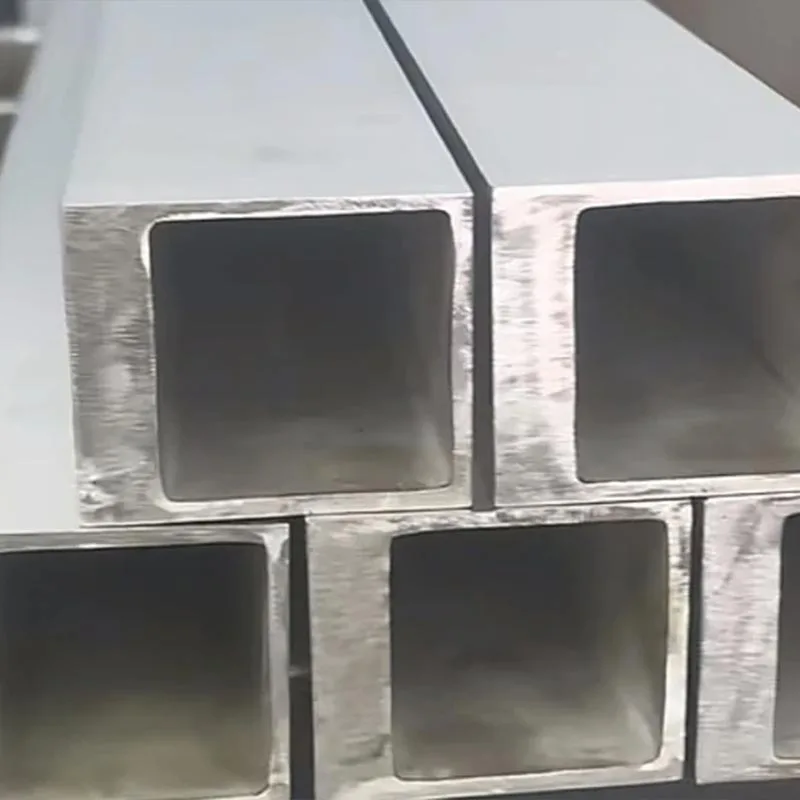
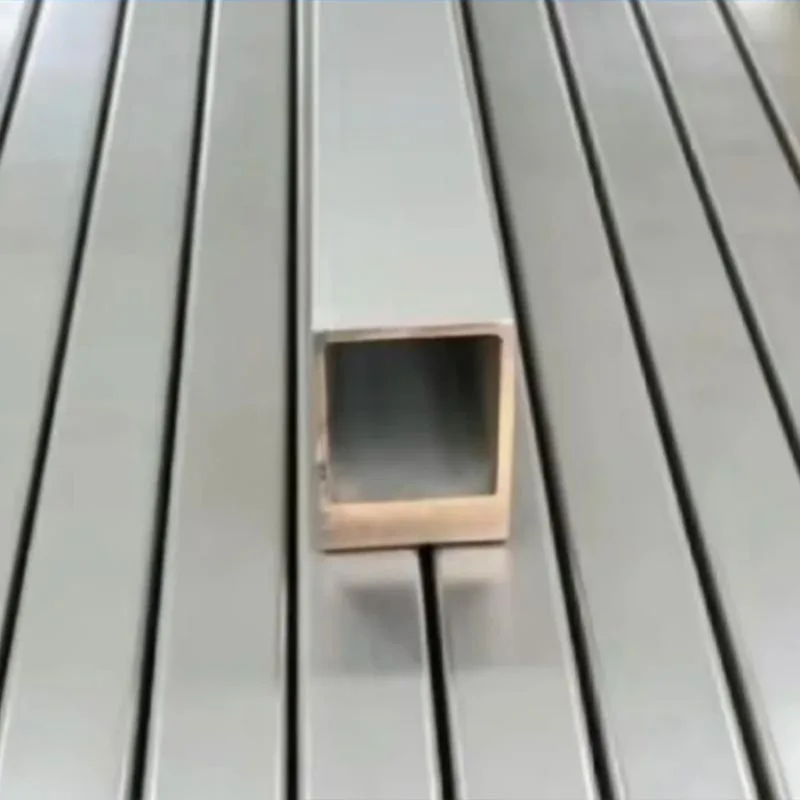
Ji lai da is a professional China manufacturer of stainless steel square extruded pipe, providing seamless hot-extruded square tubes with superior pressure integrity, thermal performance, and customized cross-sections. Unlike welded square tubes, these pipes are formed from a single billet without weld seams or weak corners, ensuring higher strength, better corrosion resistance, and excellent dimensional stability. Available in 304, 316, 310, 310S, 316L and other austenitic stainless steel grades, our factory offers customized solutions, MTC documentation, and direct wholesale supply for global industrial buyers.
316 Extruded Square Pipe
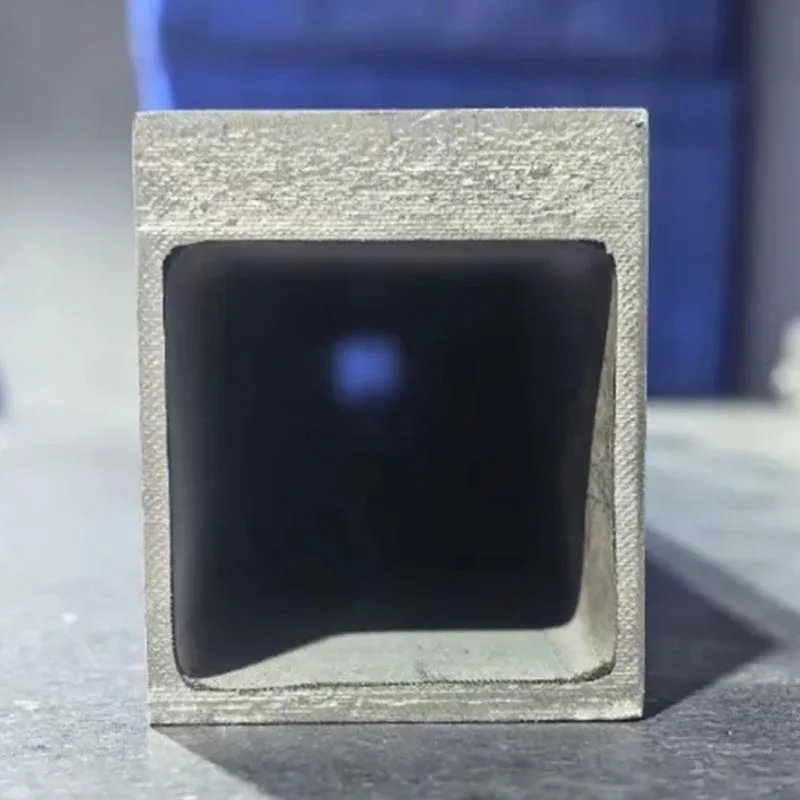
Jiangsu Ji Lai Da Nickel-Based Alloy Co., Ltd. manufactures the 316 extruded square pipe using hot extrusion technology, delivering a seamless one-piece structure with no weld seams. 316 stainless steel contains 2–3% molybdenum, giving it noticeably better resistance to pitting and crevice corrosion than 304-grade alternatives. The 316 extruded square pipe from Ji lai da is well suited for saltwater exposure, chemical processing, and any environment where chloride-induced corrosion is a concern — all at a price point significantly lower than nickel-based alloy square pipes.
304 Extruded Square Pipe
304 is the most widely used stainless steel in the world — and for good reason. It delivers solid corrosion resistance, good formability, and reliable mechanical strength at the lowest material cost in the stainless family. The 304 extruded square pipe from Jiangsu Ji Lai Da Nickel-Based Alloy Co., Ltd. takes those same advantages and forms them into a seamless square profile through hot extrusion, giving you a one-piece tube with no weld seams at a price that nickel alloys and even 316 can't touch. If your project doesn't face chlorides or extreme temperatures, 304 is almost always the smartest economic choice.
AI Liquid Cooled Cooling Pipe
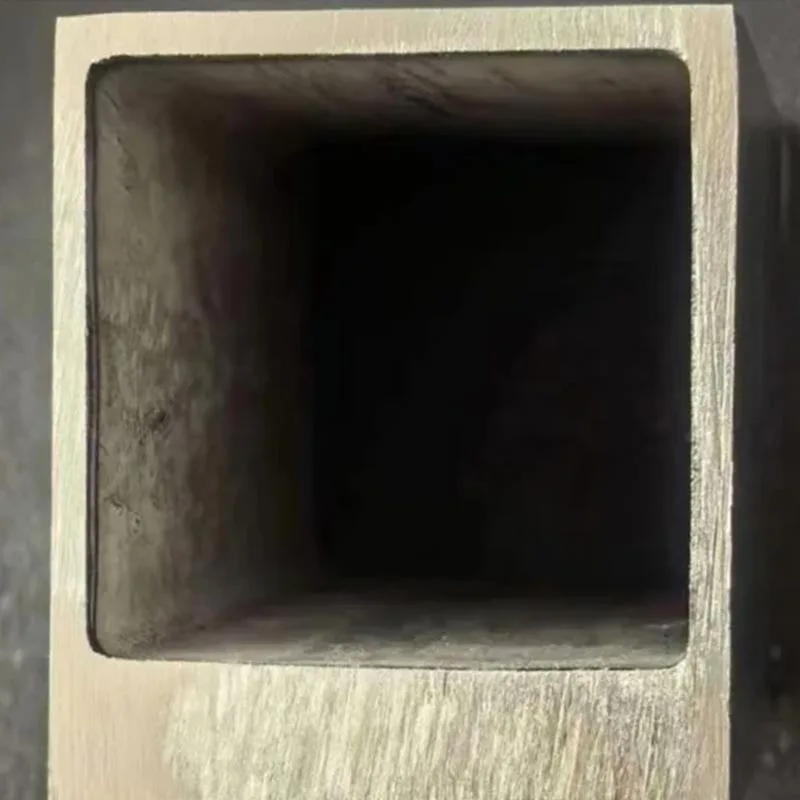
AI liquid cooled cooling pipe is a hot-extruded seamless shaped profile designed to carry coolant directly against the heat-generating components inside AI training racks — where a single cabinet can draw 100 kW and air cooling can no longer remove that heat density at acceptable fan power or acoustic levels. The pipe features an unequal-wall cross-section: 3.3 mm on three sides and 13 mm on the heat-spreader face, minimizing thermal path length where it matters most.
How Die Design Works and Why It Affects Your Quote?
When a buyer sends a drawing for a custom profile, the first question is not "can we make it." The first question is "can the metal flow fill this shape in one pass." Metal flows under compression along the path of least resistance. A deep, narrow cavity in the die - the 13mm base wall of the AI cooling tube, for example - fills last and fills slowest. If the preheat temperature is not uniform across the billet, the colder side will resist flow and the tube will come out with an incomplete fill on the thick wall.
We address this through die design: the cavity geometry includes tapers and transition radii that guide the metal flow. The induction heating system maintains the billet at forging temperature within plus or minus 15 degrees. And the press speed is calibrated to the profile's fill requirement - slower for deep cavities, faster for shallow, symmetric shapes.
For a standard profile (square, rectangular, hexagonal), we have existing tooling and can quote immediately. For a custom profile, new die fabrication takes 15 to 20 working days. The die cost is amortized into the per-meter price for production orders above 500 meters; for smaller orders, a one-time tooling charge applies. This is why we ask for the total quantity in the RFQ - it determines whether the die cost is spread across the order or charged separately.
Dimensions and Tolerances
|
Parameter |
Standard Profiles |
Custom Profiles |
|
Cross-Section |
10 x 10 mm to 80 x 80 mm |
Per buyer drawing |
|
Wall Thickness |
2 to 10 mm |
2 to 13 mm (unequal wall available) |
|
Length |
3000 to 6000 mm |
3000 to 6000 mm |
|
Cross-Section Tolerance |
+/- 0.3 mm |
+/- 0.1 mm (precision), +/- 0.3 mm (standard) |
|
Wall Tolerance |
+/- 10% |
+/- 8% (precision), +/- 12% (standard) |
|
Straightness |
<= 2 mm per meter |
<= 1.5 mm per meter (precision) |
|
Surface |
Pickled, polished, or bright-annealed |
Per spec |
|
Corner Radius |
1 to 3 mm (standard) |
Per drawing |
Precision tolerances are specified by buyers who need the tube to fit into a machined housing or mate with another component without gap. The tighter the tolerance, the slower the production rate and the higher the per-meter cost. For most structural and architectural applications, standard tolerance is sufficient.
Materials and Corrosion Strategy
The grade selection for a special shaped stainless steel seamless tube follows the same logic as round pipe, but with an additional consideration: the application may require the shape to be a structural member, not just a fluid carrier. In that case, mechanical properties matter as much as corrosion resistance.
304. General-purpose. Architectural square tube, equipment framing, non-corrosive structural. Lowest cost.
316 and 316L. Chloride-bearing environments. Marine equipment, coastal structures, AI cooling tubes where the coolant contains glycol or inhibited brine. 316L is specified when the profile will be welded into a larger assembly.
310S. High-temperature structural. Furnace framing, kiln supports, heat-treatment fixtures. The 25Cr-20Ni chemistry holds oxidation resistance to 1150 C.
2205 duplex. When the profile must carry mechanical load in a chloride environment. Yield at 450 MPa means the section can be thinner than 316L for the same structural capacity. Used in offshore platform structural members and desalination plant internals.
High-nickel austenitic (Х20Н25 / 03Х20Н25). Profiles for CIS-market chemical equipment where moderate acid resistance is needed at lower cost than nickel alloys. The low-carbon variant prevents sensitization in profiles that will be welded downstream.
Inspection and Documentation
Every shipment of special shaped stainless steel seamless tube from Jiangsu Ji Lai Da Nickel-Based Alloy Co., Ltd. carries EN 10204 3.1 MTC standard, with 3.2 available on request. The documentation package includes:
• Material Test Certificate (EN 10204 3.1 or 3.2)
• Chemistry analysis report (full elemental scan)
• Mechanical test report (tensile, yield, elongation, hardness)
• Dimensional inspection report (cross-section, wall thickness, length, straightness, corner radius)
• Visual and surface inspection record
• Supplementary testing if specified: PMI, ultrasonic, hydrostatic
For AI data center applications, buyers frequently request an additional dimensional map report that compares every specified drawing dimension to the measured value on a sample tube from the production run. We produce this report at no additional cost when the buyer provides a drawing with tolerance callouts. ISO 9001 governs the quality system. SGS, BV, and TUV inspection available.
Ordering Process
Send an RFQ with the following:
1. Profile geometry. For standard shapes (square, rectangular, hexagonal), specify dimensions. For custom profiles, attach a drawing with tolerances and corner radii.
2. Grade and standard. UNS or national standard equivalent. State whether dual-standard certification is needed.
3. Wall configuration. Equal wall (specify thickness) or unequal wall (specify each wall). For unequal wall, indicate which wall is the thick one and which direction it faces.
4. Length and quantity. Total meters or number of pieces. For custom profiles requiring new tooling, minimum order is 300 kg or 200 meters, whichever is greater.
5. Surface finish. Pickled (standard), polished (specify Ra), or bright-annealed.
6. Documentation. EN 10204 3.1 or 3.2. List supplementary testing. For AI cooling applications, specify whether a dimensional map report is required.
7. Delivery terms. FOB Shanghai, CIF to your port, or DDP to your facility. Middle East and Indian buyers typically prefer CIF; Southeast Asian buyers often nominate their own forwarder for FOB.
FAQ
Can you produce a profile that is not listed in the table?
Yes. The table covers recurring profiles. We have produced U-channels, D-shaped tubes, multi-cell profiles, and profiles with internal ribs. Send a drawing and we will assess whether the geometry is extrudable - the main constraint is whether the metal can fill all cavities in the die in a single pass without tearing.
What is the lead time for a custom profile?
Existing tooling (standard square, rectangular, hexagonal): 3 to 4 weeks. New die fabrication: add 15 to 20 working days. After the first production run, subsequent orders use the same die and lead time drops to the standard range. We retain tooling for repeat orders at no storage cost.
Can you produce unequal-wall profiles in grades other than 304 and 316?
Yes, but the forgeable window is tighter for 2205 and 310S. The deep-cavity fill on a thick wall requires higher press force and slower speed, and high-alloy grades resist flow more strongly. We will confirm feasibility per drawing. Inconel 718 and C276 custom profiles are possible but require dedicated campaign scheduling and longer lead time.