Products
Quality Nickel Based Alloy Forged Round Bar for Industrial Applications
Nobody buys a Nickel Based Alloy Forged Round Bar because it was the cheap option. Carbon steel rounds cost a fraction of the price, and even stainless steel bars run significantly less per kilogram. A buyer sourcing Inconel 625 or Hastelloy C-276 in bar form is solving a specific engineering problem - one where the metal will sit inside a chemical reactor, a gas turbine, a downhole tool, or a marine fastener assembly, and the cost of failure dwarfs the cost of the material. The forging step exists because those environments demand a bar with no internal voids, no centerline segregation, and no weak plane hiding behind a clean surface.
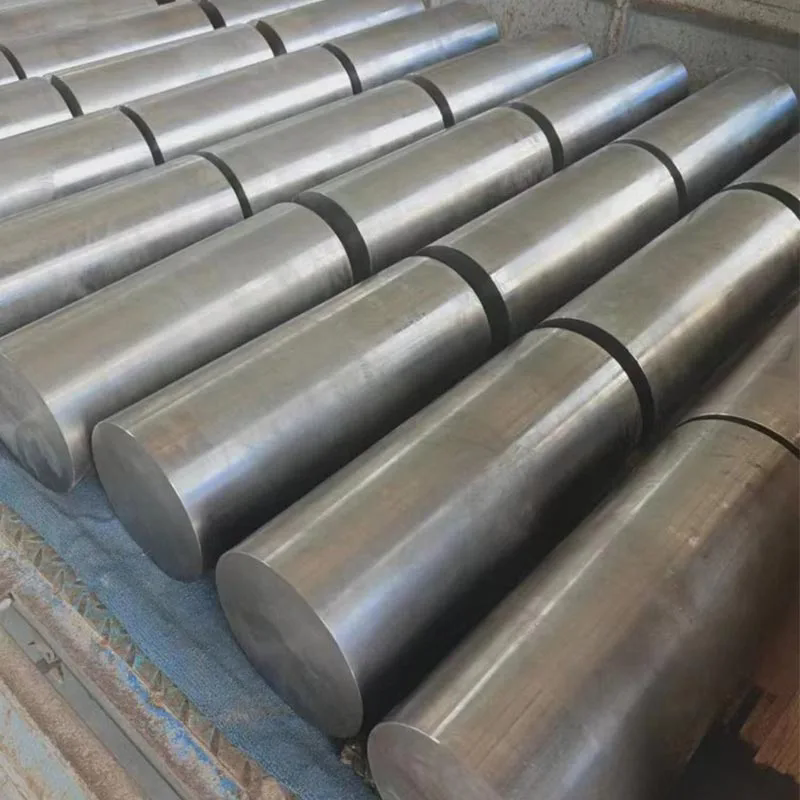
As a professional manufacturer and supplier of Nickel based Alloy Forged Round Bars in China, JILAIDA employs specialized forging processes to significantly improve the material's density and internal structure uniformity, eliminating porosity and segregation defects. Straightness can be achieved within 1mm/m, providing higher yield and lower material loss for subsequent precision machining.
Forging Nickel Alloys Is Not Forging Steel
The first thing a forging shop learns when it transitions from stainless to nickel alloys is that the temperature window narrows dramatically. Inconel 718 has a recommended forging range of roughly 1010 to 1120C - a 110-degree band, compared to the 100-plus-degree range available for 304 stainless. But the real challenge is not the range itself. It is that nickel alloys retain strength at elevated temperature. The press force required to achieve a given reduction ratio on a nickel alloy billet is roughly 40 to 60 percent higher than on an austenitic stainless steel of the same diameter at the same temperature. This means the press capacity, die design, and ram speed all need to be set differently, and the learning curve from one alloy family to another is steep.
Nickel alloys also resist heat transfer more than steel. A billet soaked to surface temperature does not necessarily carry that temperature through to its core. Forging a billet with a thermal gradient - hot surface, cooler center - produces uneven deformation and can create internal tears that will not be visible on the finished bar. The soak time before forging must be longer, and the transfer from furnace to press must be faster, because nickel alloy billets lose their workable temperature in seconds when exposed to air at room temperature.
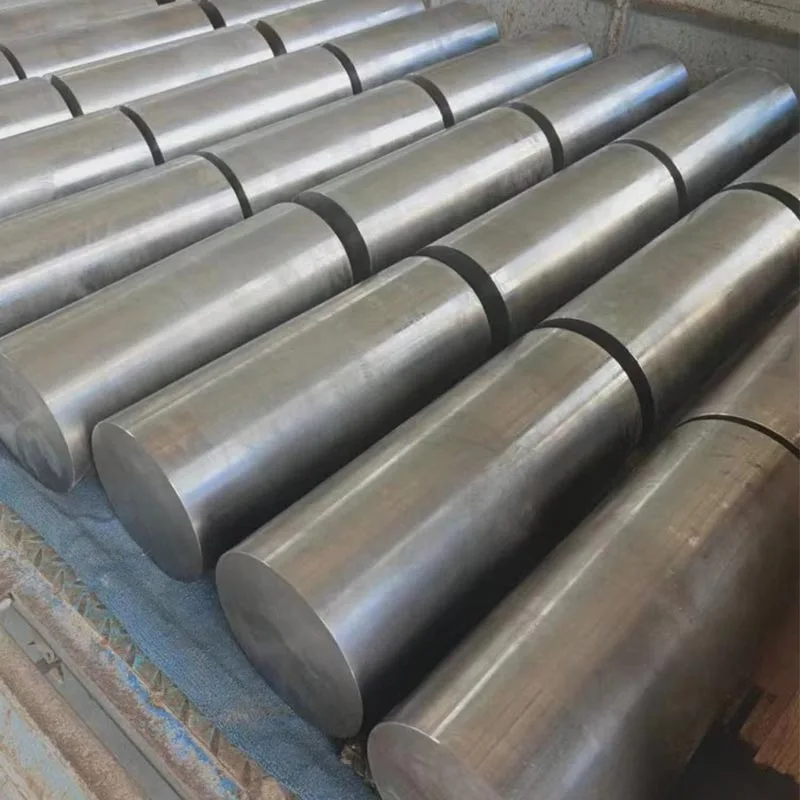
We forge Nickel Based Alloy Forged Round Bar from 20mm to 350mm in diameter. Standard production centers on 154mm diameter by 500mm length, but the full range is available for custom orders.
What Each Grade Is Forged to Resist?
Rather than listing grades in a table of temperatures, it is more useful to describe what each alloy is actually protecting against - because that is what the buyer needs to match to the service environment.
Hastelloy C-276 (N10276) is forged for environments where wet chlorine, hypochlorite bleach, or oxidizing acid mixtures are present. The high molybdenum content (15-17%) that gives C-276 its pitting resistance also makes it one of the harder nickel alloys to forge - die wear is significant, and the deformation resistance stays high even at the top of the forging range. Bars produced from C-276 typically go into chemical processing equipment: reactor internals, fasteners inside vessels, and shafts for pumps handling chlorinated media.
Inconel 625 (N06625) is the workhorse nickel alloy bar. Its combination of molybdenum (8-10%) and niobium (3.15-4.15%) gives it strength from solution strengthening rather than precipitation hardening, which means it can be forged and used without a separate aging cycle. Bars in 625 serve a broad range of end uses: marine hardware, aerospace exhaust components, nuclear reactor internals, and oil and gas downhole tooling. It is the grade most commonly stocked in bar form because the demand is consistent and broad.
Inconel 718 (GH4169) is forged for applications requiring high tensile strength at elevated temperature - gas turbine disks, fasteners for engine assemblies, and structural components in cryogenic service. Unlike 625, 718 is a precipitation-hardening alloy. The forged bar is solution-annealed and then aged to develop the gamma-prime and gamma-double-prime precipitates that give the alloy its strength. This means the forging shop must control not only the geometry but also the thermal history of the bar, because the solution-anneal condition of the as-forged bar affects the final aged properties.
HC-22 (N06022) is closely related to C-276 but with a higher chromium content (20-22.5% vs 14.5-16.5%). It is forged for environments where oxidizing conditions dominate over reducing ones - flue gas desulfurization systems, waste incinerator internals, and aggressive chemical mixtures where C-276 alone does not provide sufficient margin.
Alloy 825 (N08825) and its Russian-standard equivalent Х20Н25 occupy a slightly lower alloy level than the Hastelloy and Inconel grades above. They are forged for applications involving sulfuric and phosphoric acid service, and for components in pollution control equipment. The 03Х20Н25 variant with controlled low carbon (0.03% max) is specified where sensitization during forging or welding must be avoided.
08Х17Н14М2 is the Russian-standard equivalent of 316L stainless, included here because buyers in CIS markets often source it alongside nickel alloy bars from the same supplier. It forges more readily than any of the nickel grades above and serves general corrosive-service applications at lower severity.
Straightness, Tolerance, and What They Mean for the Buyer
|
Grade |
UNS |
Primary Service Threat |
Typical Forged Diameter Range |
|
Hastelloy C-276 |
N10276 |
Pitting and crevice corrosion in oxidizing acids |
20-200mm |
|
Inconel 625 |
N06625 |
Combined corrosion and moderate high-temp strength |
20-350mm |
|
Inconel 718 |
GH4169 / N07718 |
High tensile strength at 650C+ service |
20-250mm |
|
HC-22 |
N06022 |
Oxidizing acid and mixed-environment corrosion |
20-180mm |
|
Alloy 825 |
N08825 |
Sulfuric and phosphoric acid environments |
20-200mm |
|
Х20Н25 / 03Х20Н25 |
- |
High-nickel austenitic, near-equivalent to 825 |
20-150mm |
Nickel Based Alloy Forged Round Bars are specified to tighter straightness tolerances than rolled bars, and this is one of the primary reasons buyers choose forging over rolling for these grades. A rolled Inconel 625 bar may have a straightness deviation of 4mm per meter. A forged and straightened bar of the same grade and size can be delivered at 1mm per meter or better. For buyers who will machine the bar into rotating components - shafts, spindles, valve stems - this straightness directly affects machining yield. Less stock removal means less waste of an expensive alloy, and a bar that starts straight reduces the risk of tool deflection during CNC turning.
Diameter tolerance on forged nickel alloy rounds is typically plus-side only: +0mm to +2mm on diameters up to 100mm, +0mm to +3mm on diameters above 100mm. This allows the buyer to finish-machine to exact size. If the bar is specified as a finished size with no further machining, we can supply peel-turned or ground bars to h9 or h10 tolerance - but this should be stated in the RFQ, because the production route and cost change significantly.
- View as
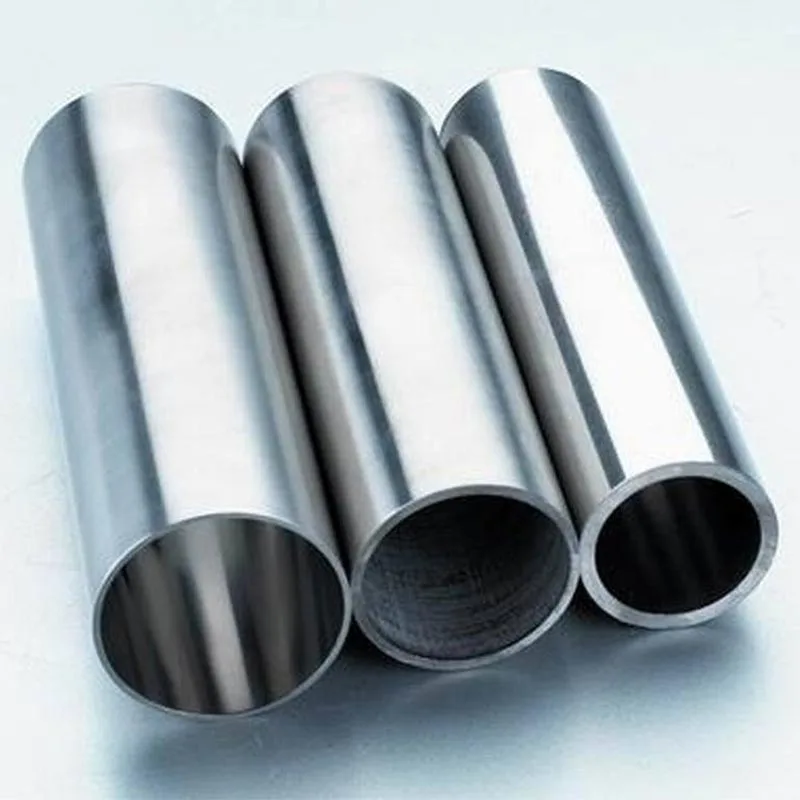
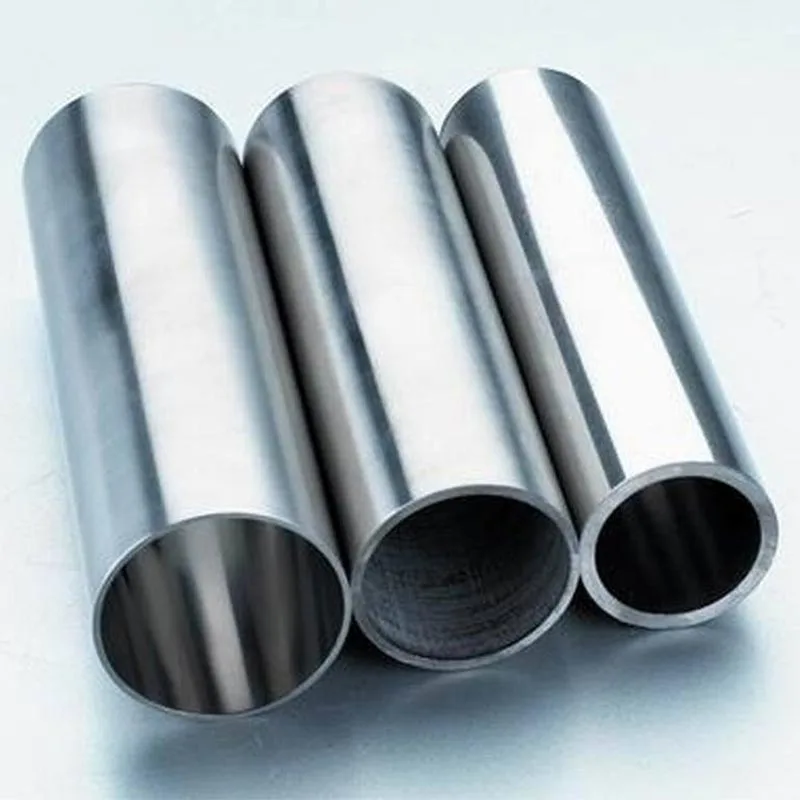
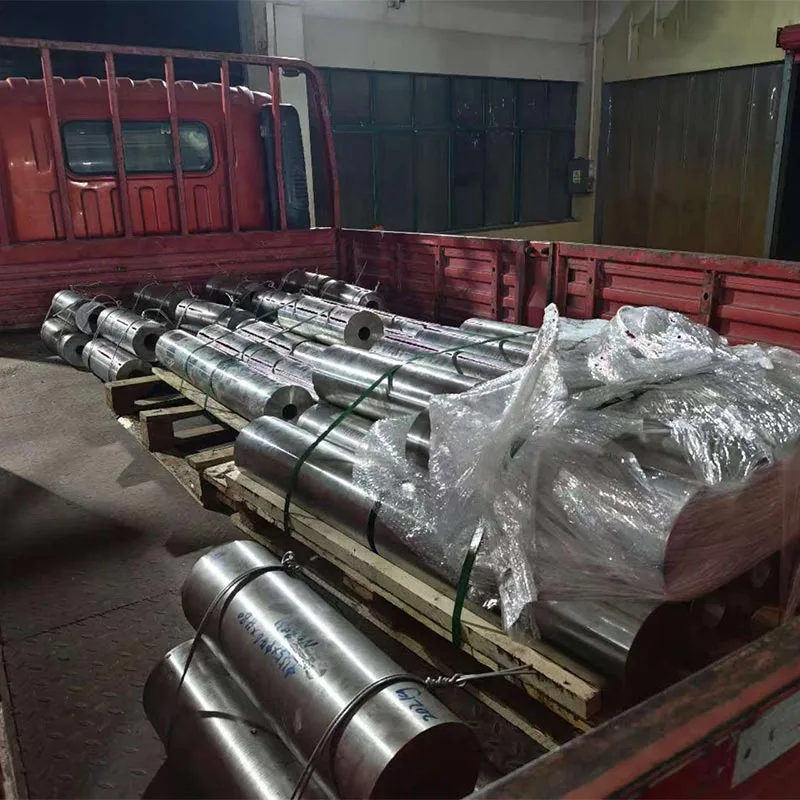
HC22 Precision Ground Hollow Cylinder
Buy quality HC22 precision ground hollow cylinder from JILAIDA, a professional manufacturer in China. It is a forged, deep-hole drilled, and ground-finished hollow component made from Hastelloy C-22 (UNS N06022) — one of the most versatile corrosion-resistant alloys available, with a broader passivation range than C-276 and strong performance against both oxidizing and reducing media. For buyers running FGD scrubbers, chlor-alkali cells, chlorination reactor liners, acid injection mandrels, or semiconductor process chambers where trace metallic contamination is unacceptable, C-22 adds margin that 316L and even C-276 cannot match.
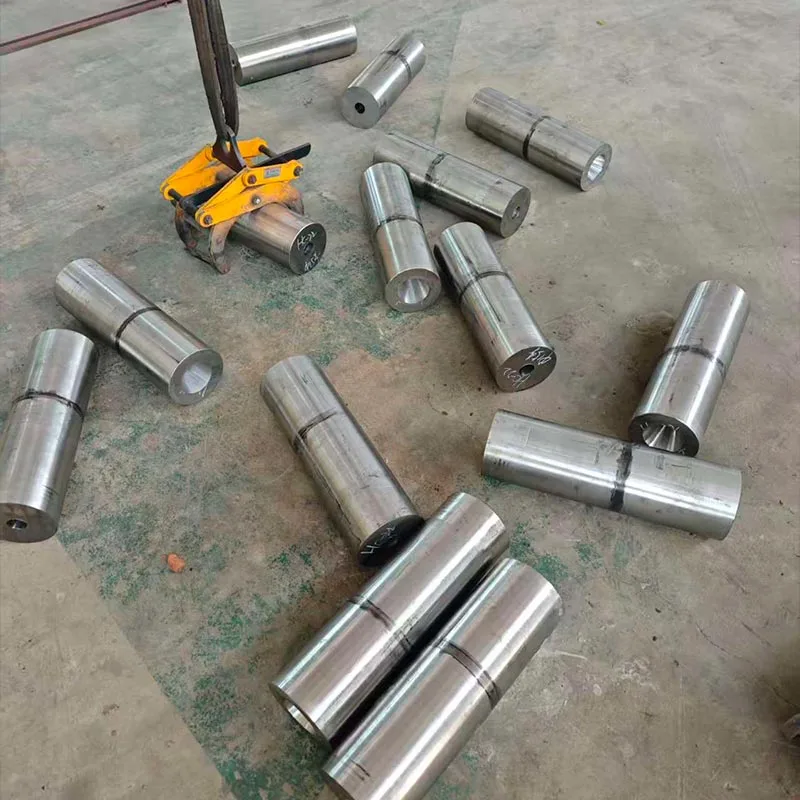
8031 Finished Round Billet
An 8031 finished round billet is a hot-forged, rough-turned, and precision-sawn short bar of Alloy 31 (UNS N08031, 27Cr-31Ni-6.5Mo-N) — a nickel-iron-chromium-molybdenum grade engineered for concentrated acid environments where 316L and Alloy 20 cannot survive. JILAIDA factory supplies it in a lathe-ready condition: forging scale removed, OD turned to a clean metallic surface, and both ends cut on a CNC abrasive saw that leaves a flat, fracture-free face. Standard stock is 154 mm diameter × 500 mm length; diameters from 20 to 350 mm and cut-to-length pieces are available on the same production line. Each billet ships with an EN 10204 3.1 mill test certificate.
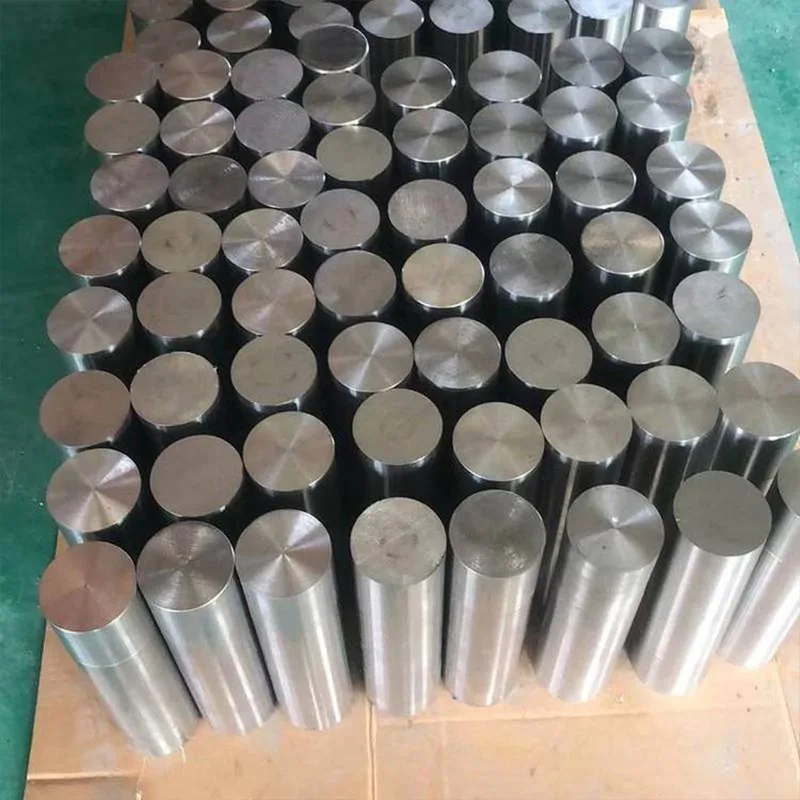
154mm 625 Forged Round Steel
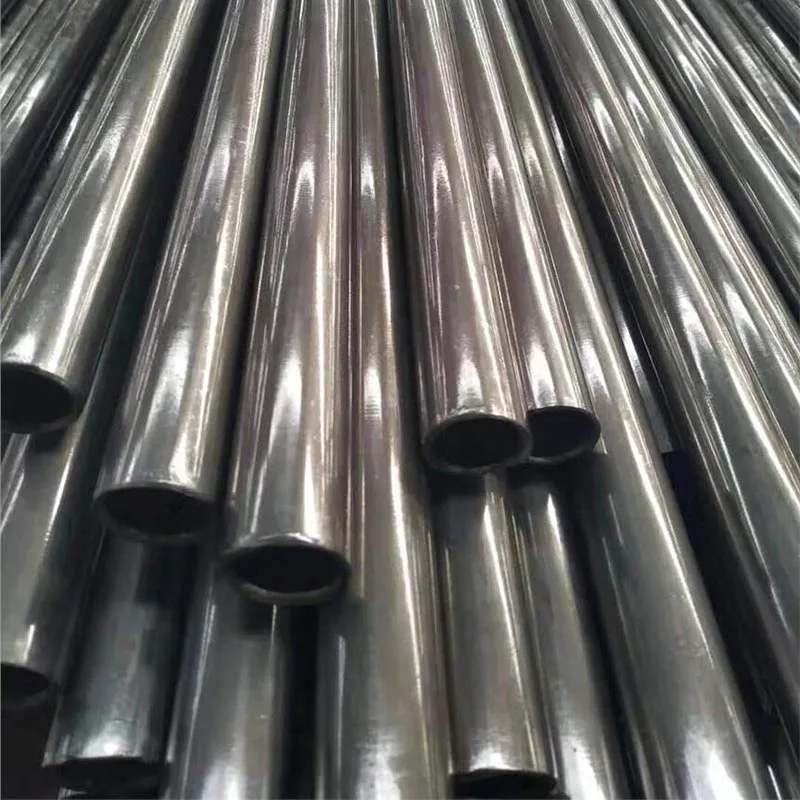
Buy quality 154mm 625 Forged Round Steel from JILAIDA, a professional manufacturter in China. It is a solid-solution-strengthened nickel alloy — 58 % Ni, 22 % Cr, 8–10 % Mo, 3–4 % Nb — that delivers high yield strength (≥ 414 MPa), outstanding corrosion resistance across oxidizing and reducing media, and service temperatures up to 980 °C without age hardening. These properties make it one of the most widely specified alloys for seamless pipe in sour-gas, seawater, and chemical-processing service.
Hastelloy C276 Nickel Based Alloy Forged Round Steel
As a leading China manufacturer,JILADA would like to provide you quality Hastelloy C276 nickel based alloy forged round steel, which is a high-performance nickel alloy bar designed for applications where stainless steel grades such as 304 and 316 cannot provide sufficient corrosion resistance.
What the Test Certificate Should Carry?
For stainless steel bars, a standard EN 10204 3.1 MTC with chemistry and mechanicals is sufficient for most applications. Nickel Based Alloy Forged Round Bars demand more. The certificate should include:
• Full chemical analysis with all specified elements, not just the primary ones - trace elements like sulfur, phosphorus, and silicon affect forgeability and service performance
• Grain size per ASTM E112, because a forged nickel alloy bar with inconsistent grain size will machine unevenly and may fail in fatigue
• Ultrasonic test report covering the full cross-section, not just surface inspection - internal discontinuities in nickel alloys can be small, deep, and invisible without phased-array UT
• For 718 specifically, the solution-anneal and aging treatment record must accompany the MTC, because the final properties depend on the thermal history
Jiangsu Ji Lai Da Nickel-Based Alloy Co., Ltd. provides EN 10204 3.1 MTC as standard on all forged nickel alloy round bars. Third-party witnessing for 3.2 certification is available on request. UT reports and grain size measurements are included in the documentation package when specified in the RFQ.
Sourcing Reality
The supply chain for Nickel Based Alloy Forged Round Bar is thin. Most stainless steel forging shops will not attempt nickel alloys because the press parameters, die materials, and soak schedules are different enough that the first few heats carry high scrap risk. Buyers who request a nickel alloy forged bar from a general-purpose steel forge often receive a quote with a wide tolerance band and a lead time padded for trial runs.
Factory-direct sourcing from a shop that routinely forges nickel alloys eliminates this overhead. We maintain forging parameters for each grade in our production records, which means repeat orders of the same grade and size do not require trial heats. For new profiles or first-time grades, we recommend a small qualifying order with full testing before committing to volume.
Pricing is available on FOB or CIF basis. For buyers consolidating shipments of nickel alloy and stainless steel bars from the same supplier, we can combine both product lines in a single container to reduce logistics cost per kilogram. DDP terms are available for select destinations - include your delivery address in the RFQ and we will quote door-to-door if the route supports it. As a China manufacturer producing both nickel alloy and stainless steel forged bars, we offer consolidated factory-direct pricing that a single-product supplier cannot match.