Products
Buy Quality Nickel Based Alloy Seamless Pipe at Factory Price
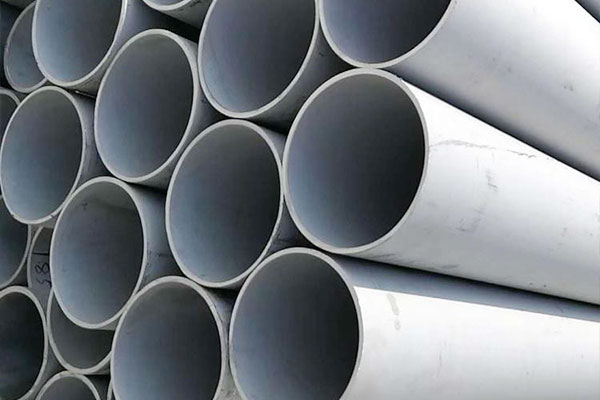
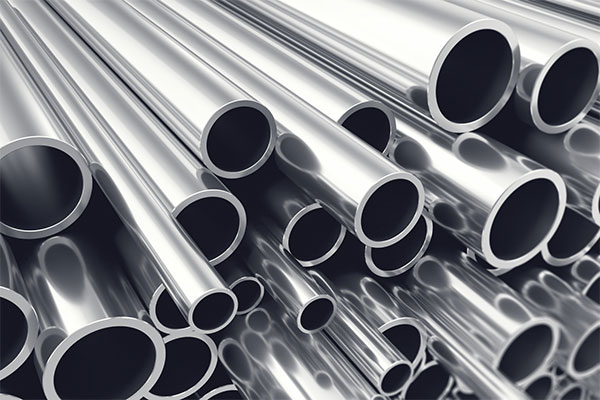
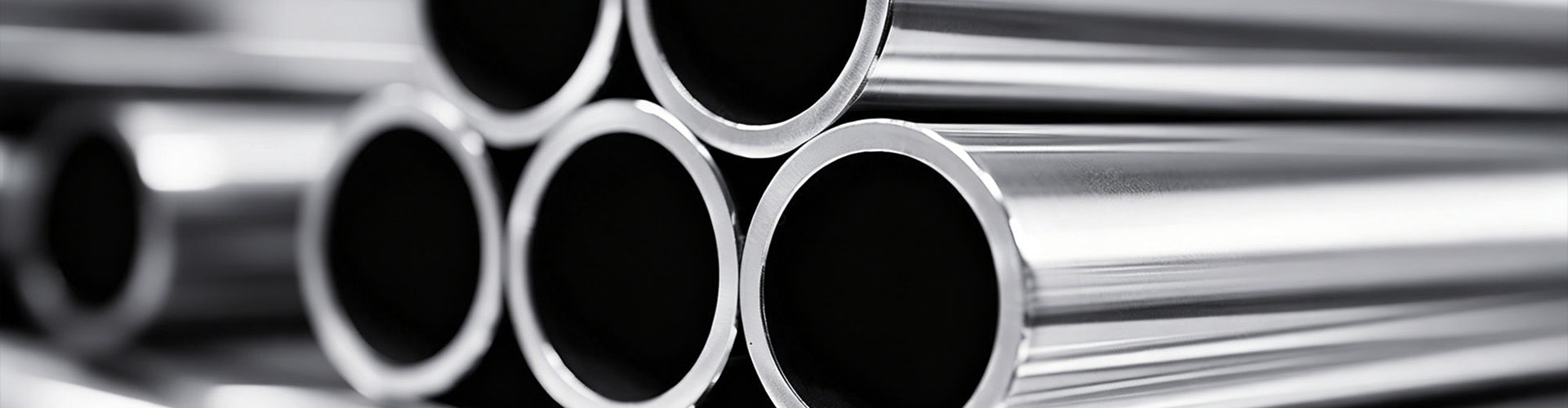
JILAIDA, a professional manufacturer in China, produces Nickel Based Alloy Seamless Pipe using a hot extrusion process, achieving a yield rate exceeding 95% and a loss of less than 5%, significantly superior to cold-drawn (loss 15-25%) and welded tubes (which have weak points in the longitudinal weld). Our products cover mainstream grades such as C276, N06625, Inconel 718, N08031, and HC-22, offering both finished tubes (outer diameter 6-89mm, wall thickness 3-9mm) and rough extruded tube blanks (wall thickness ≥9mm). The latter is specifically designed for cold-working companies to cold-draw themselves to reduce overall costs. Our products are widely used in harsh environments such as chlor-alkali chemical industry, acidic oil and gas fields, pharmaceuticals, aerospace, and nuclear power.
Two Products From One Press
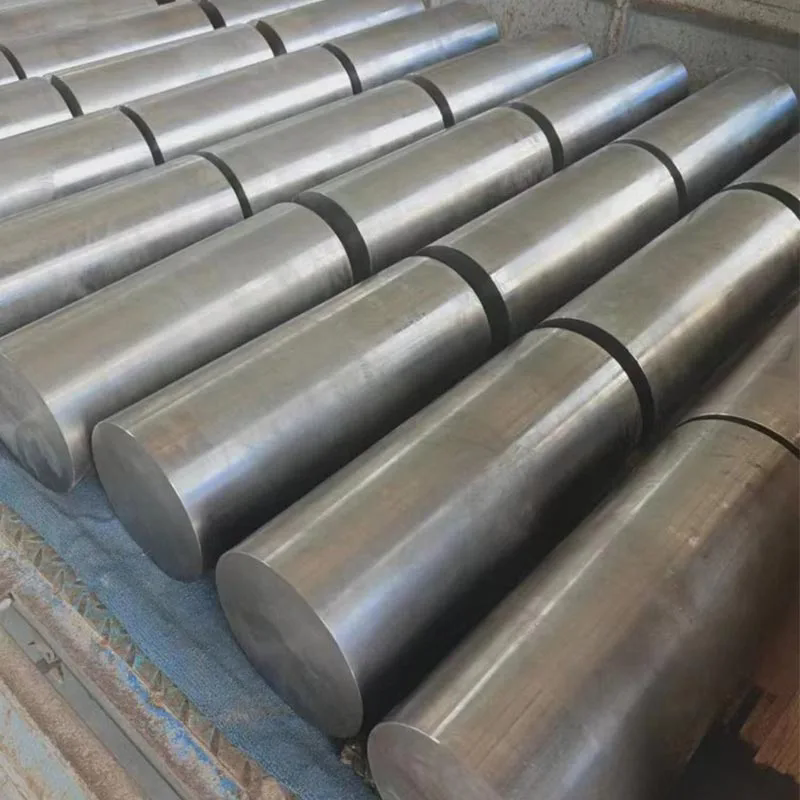
Most manufacturers treat nickel alloy pipe as a single product: the finished tube, pickled, tested, and ready to install. Jiangsu Ji Lai Da Nickel-Based Alloy Co., Ltd. ships that product every day - but we also ship something that most competitors will not: the rough-extruded hollow, straight off the press, with mill scale intact and wall thickness at 9mm or above. This is the semi-finished billet tube, and it exists because a significant portion of our buyers operate their own cold drawing or pilgering equipment. They do not want our finished tube. They want our hollow.
The reason is cost. A buyer who purchases a rough extruded hollow and cold-draws it to finished dimensions in-house captures two savings: the cold-work step is done at their labor rate rather than ours, and they control the final wall reduction ratio, which determines the mechanical properties of the finished tube. For buyers in India and Southeast Asia where cold-drawing labor is significantly cheaper than hot-extrusion capacity, the economics are clear. Buy the hollow from the China manufacturer that has the press. Do the cold work yourself.
The nickel based alloy seamless pipe you receive from us is either finished (ready for installation) or semi-finished (ready for your cold drawing line). The table below separates the two.
|
Parameter |
Finished Pipe (Bright/Pickled) |
Semi-Finished Rough Tube (As-Extruded) |
|
OD Range |
6 - 89 mm |
Up to 89 mm |
|
Wall Thickness |
3 - 9 mm |
9 mm and above |
|
Length |
3000 - 10000 mm |
3000 - 3500 mm |
|
OD Tolerance |
+/- 0.5 mm |
+/- 1.0 mm |
|
WT Tolerance |
+/- 10% |
+/- 15% |
|
Internal Surface |
Ra <= 1.6 um pickled, <= 0.8 um bright-annealed |
As-extruded, mill scale |
|
External Surface |
Pickled, polished, or bright-annealed |
As-extruded (dark oxide) |
|
End Preparation |
Plain, beveled, or flanged |
Plain cut |
|
Typical Buyer |
End user, EPC contractor, fabricator |
Cold drawing mill, pilgering operator |
|
MTC |
EN 10204 3.1 standard, 3.2 on request |
EN 10204 3.1 standard, 3.2 on request |
The Cost Logic of Hot Extrusion for Nickel Alloys
Nickel-based alloys are expensive material. C276 feedstock runs 8 to 12 times the price of 316L by weight. When the raw material costs that much, material efficiency is not a nice-to-have metric - it is the primary cost driver. A process that wastes 20 percent of the input material on a C276 billet is burning more money than the labor cost of the entire production run.
Hot extrusion at Ji lai da achieves a finished-product yield above 95 percent with material loss below 5 percent. The number matters because of what it is being compared against. The alternative production routes for Nickel Based Alloy Seamless Pipe are:
Piercing and rotary elongation. The traditional Mannesmann process. A heated billet is pierced by a conical plug and rolled over a mandrel. It works well for carbon steel and standard stainless, but nickel alloys work-harden during rotary elongation, requiring intermediate reheating and causing higher surface defect rates. Yield typically runs 78 to 85 percent. The 10 to 17 percentage point gap between 85 and 95 percent is pure material waste - and at C276 prices, that gap is the difference between a competitive quote and one that loses the order.
Welded tube from strip. Roll-form strip into a tube and TIG-weld the seam. Cheaper per meter, but the weld seam in a nickel alloy is a metallurgical liability. The heat-affected zone sees carbide precipitation and molybdenum segregation, and the seam becomes the first point of failure in acid service. For corrosion-critical applications, welded nickel alloy tube is not an acceptable substitute.
Centrifugal casting. Pour molten alloy into a rotating mold. Produces a tube with no seam, but the wall is thick, the bore is rough, and the as-cast grain structure is coarse. Extensive machining is required to reach finished dimensions, and material loss from machining can exceed 30 percent. Centrifugal cast tube makes sense for very large diameters (above 300mm) where extrusion press capacity is insufficient. Below 89mm, extrusion is superior in every metric.
Forging and boring. Forge a solid bar and machine the bore from solid. Used for very thick-wall or very short tubes. Material loss is extreme - often 40 to 50 percent of the input billet becomes chips. Only economical when the buyer needs a small quantity of an unusual grade and cannot justify extrusion tooling.
Against all four alternatives, hot extrusion delivers the lowest total material cost per finished meter for nickel based alloy seamless pipe in the 6 to 89mm OD range. The factory-direct pricing we offer reflects this efficiency. When a buyer compares our quote against a competitor using the Mannesmann process on the same grade, the 10 to 17 percent yield advantage shows up as a lower per-kilogram price - not because our alloy is cheaper, but because we waste less of it.
Alloys and What They Survive?
The quality Nickel Based Alloy Seamless Pipe offered by at JILAIDA factory covers six primary grades plus Russian-standard equivalents. Each grade exists because a specific corrosion or mechanical environment destroys standard stainless steel. The selection is not about which alloy is "better" - it is about which failure mode the buyer is designing against.
C276 (N10276). The cornerstone grade. 57Ni-16Cr-16Mo-4W. Resists reducing acids - hydrochloric, sulfuric, phosphoric - and wet chlorine gas. The 16 percent molybdenum is the active element against chloride pitting; the 4 percent tungsten reinforces grain boundary resistance. C276 seamless pipe goes into chlor-alkali plant headers, sour gas injection lines (NACE MR0175 compliant), and pharmaceutical reactor coils. The buyer almost always specifies EN 10204 3.2 with SGS or BV witness. Temperature ceiling: 1100 C intermittent, 400 C continuous for corrosion-critical service.
N06625. 62Ni-22Cr-9Mo-3.5Nb. The niobium stabilizes the matrix against sensitization without relying on low carbon, which means 625 can hold strength at temperature where C276 would soften. Used in gas turbine combustor liners, aerospace ducting, and nuclear heat exchanger tubing. In seamless pipe form, 625 serves seawater piping on offshore platforms where its resistance to crevice corrosion in stagnant seawater exceeds 316L by an order of magnitude. Temperature ceiling: 815 C continuous.
Inconel 718 (N07718) / GH4169. 53Ni-19Cr-3Mo-5Nb-1Ti-0.6Al. Precipitation-hardened to 1050 MPa yield. This is not a corrosion-resistant grade - it is a structural grade that also happens to resist oxidation. Seamless pipe in 718 goes into cryogenic propulsion systems, downhole tooling for high-pressure high-temperature wells, and pressure vessel shells for defense applications. The buyer specifies the age-hardening condition (solution-treated for forming, aged for service). Temperature ceiling: 700 C continuous.
N08031. 31Ni-27Cr-6.5Mo-1.4Cu. Bridges the gap between 316L and C276 on cost and performance. The 6.5 percent molybdenum gives it pitting resistance approaching C276 in moderate chloride service, at roughly 60 percent of the cost. Used in flue gas desulfurization piping, pulp and paper digester tubes, and mixed-acid process lines where 316L fails within months but full C276 is over-specified. Temperature ceiling: 340 C.
HC-22 (N06022). 56Ni-22Cr-13Mo-3W. Superior to C276 in oxidizing acid environments where C276's passive film breaks down. The higher chromium (22 percent vs 16) shifts the corrosion mode from reducing-acid resistance to broad-spectrum acid resistance. HC-22 seamless pipe appears in supercritical water oxidation systems, hazardous waste incinerator quench sections, and pharmaceutical clean-in-place piping where mixed oxidizing and reducing agents cycle through the same line. Temperature ceiling: 1100 C intermittent.
Russian-standard grades. Х20Н25 and 03Х20Н25 serve CIS-market buyers - Russia, Kazakhstan, Uzbekistan - who require GOST chemistry ranges and GOST-compliant documentation. These grades are approximately equivalent to Alloy 825 (N08825): 20Cr-25Ni high-nickel austenitic. The low-carbon variant (03Х20Н25, C <= 0.03 percent) prevents sensitization in profiles that will see welding or thermal cycling. We issue dual-standard MTC (GOST + UNS) when requested.
From Rough to Finished: What the Cold Drawing Buyer Needs to Know
A buyer who purchases semi-finished rough tube from us is buying the starting stock for their own cold drawing or pilgering operation. The rough tube arrives at 9mm wall thickness or above, 3000 to 3500mm length, as-extruded surface. The buyer's job is to reduce the wall and OD to finished dimensions through cold work - typically 40 to 70 percent total reduction.
What makes our rough tube suitable for cold drawing is the extruded grain structure. Hot extrusion produces a fine, uniform, recrystallized grain that cold-draws cleanly without tearing. A rough tube from a Mannesmann piercing mill has a less uniform grain (the rotary elongation process creates directional grain variation around the circumference), which can cause uneven wall reduction during cold drawing and higher reject rates at the buyer's end. Our extruded rough tube draws straight and reduces evenly.
For the buyer who plans to cold-draw our rough tube, here is what we recommend specifying in the RFQ:
Inspection condition. The rough tube should be ultrasonically tested per ASTM E213 before cold drawing. Any internal discontinuity in the rough tube will propagate and enlarge during cold reduction. We perform UT on rough tube when requested, and we tag any tube that shows indications rather than shipping it and letting the buyer discover the defect after drawing.
Wall eccentricity. Our extrusion process holds wall eccentricity below 5 percent. This matters because cold drawing does not correct eccentricity - it preserves it. If the rough tube has 10 percent eccentricity, the finished tube will have 10 percent eccentricity. Buying from a manufacturer that controls eccentricity at the extrusion stage saves the buyer from trying to fix it at the drawing stage (which is nearly impossible).
End preparation for drawing. The rough tube needs swaged or pointed ends to feed through the drawing die. We can provide swaged ends as a value-added service, or the buyer can swage in-house. State your preference in the RFQ.
Chemistry verification. The MTC that travels with the rough tube is the only chemistry record the buyer will have. For C276 and HC-22, we recommend specifying a PMI (positive material identification) check at our facility before shipment, because a chemistry error discovered after cold drawing means the entire drawn production lot is scrap.
- View as
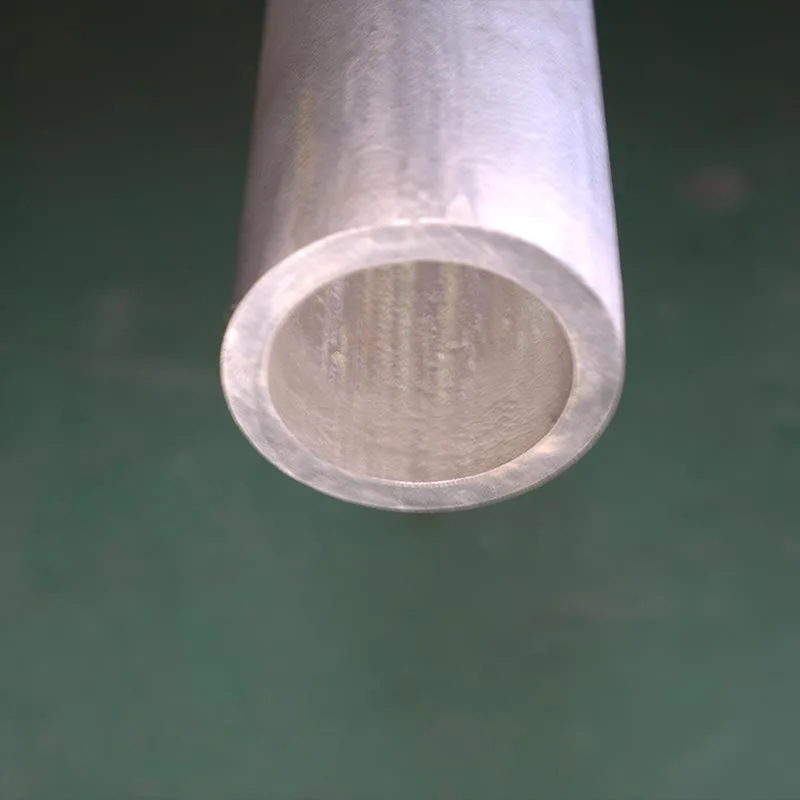
Semi-finished Nickel Alloy Seamless Tube
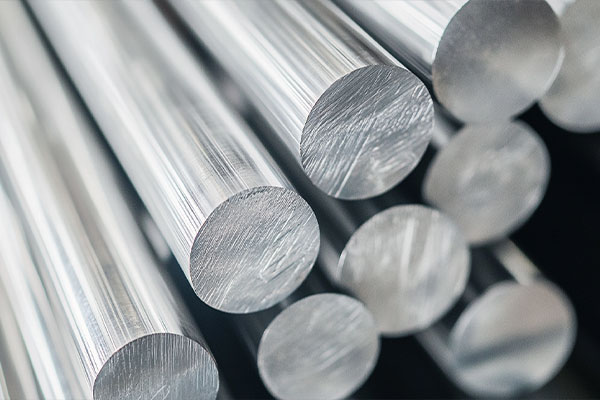
Semi-finished nickel alloy seamless tube is a hot-extruded tubular blank supplied with controlled machining allowance on both outside diameter and wall thickness, allowing manufacturers to machine final dimensions, surface finishes, and tolerance requirements according to their own drawings.
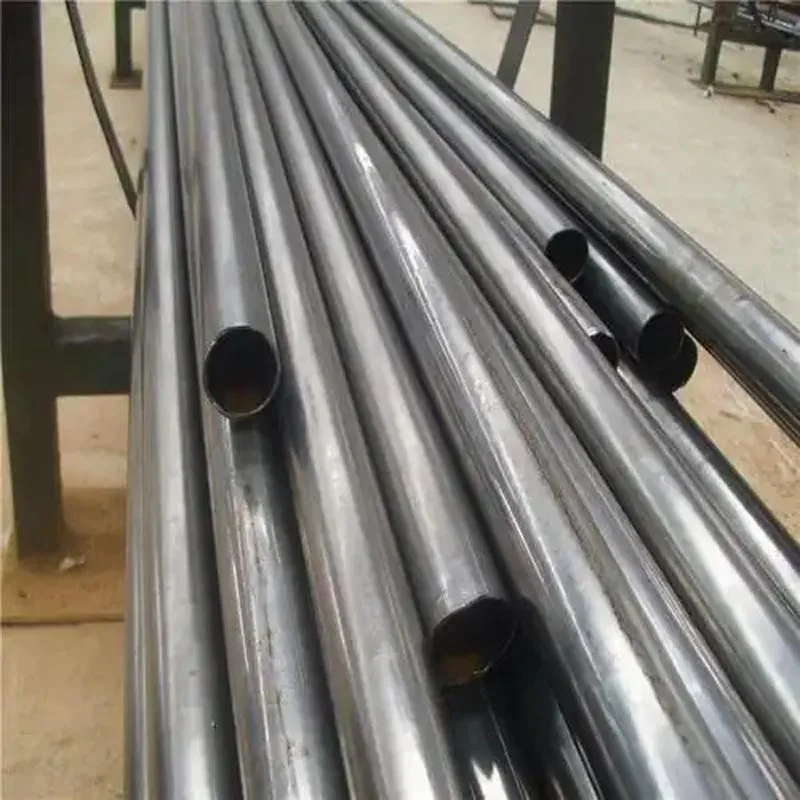
Inconel 718 Nickel Based Alloy Pipe
When procurement engineers search for a qualified China manufacturer of Inconel 718 nickel based alloy pipe, Jiangsu Ji Lai Da Nickel-Based Alloy Co., Ltd. (Ji lai da) delivers factory-direct, fully traceable solutions engineered for the most demanding high-temperature and high-pressure environments. Unlike conventional 304 or 316 stainless steel pipes — which lose strength rapidly above 500 °C — Inconel 718 retains exceptional mechanical properties up to approximately 700 °C thanks to its unique precipitation-hardening metallurgy. As an integrated China manufacturer with in-house hot extrusion capability, Ji lai da ensures every Inconel 718 nickel based alloy pipe meets aerospace, oil & gas, and power generation specifications with full MTC documentation. Send your RFQ today for competitive ex-works, FOB, CIF, or DDP quotations.
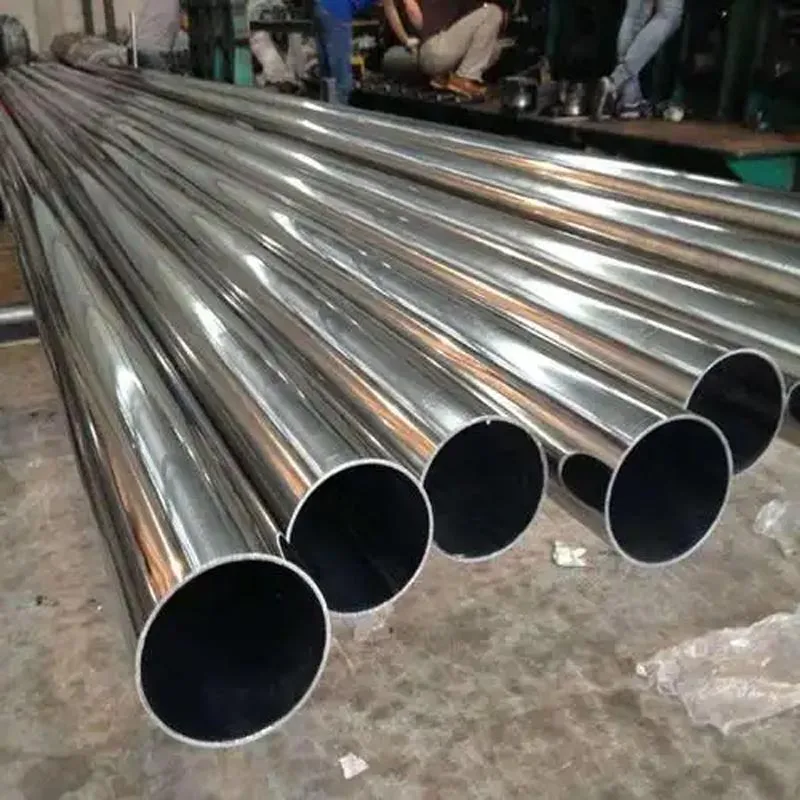
GH4169 Seamless Pipe
GH4169 seamless pipe, classified under GB/T 14992 and equivalent to Inconel 718 (UNS N07718 / W.Nr. 2.4668), is a precipitation-hardenable nickel-iron-chromium superalloy tube designed for extreme temperature and high-stress environments.
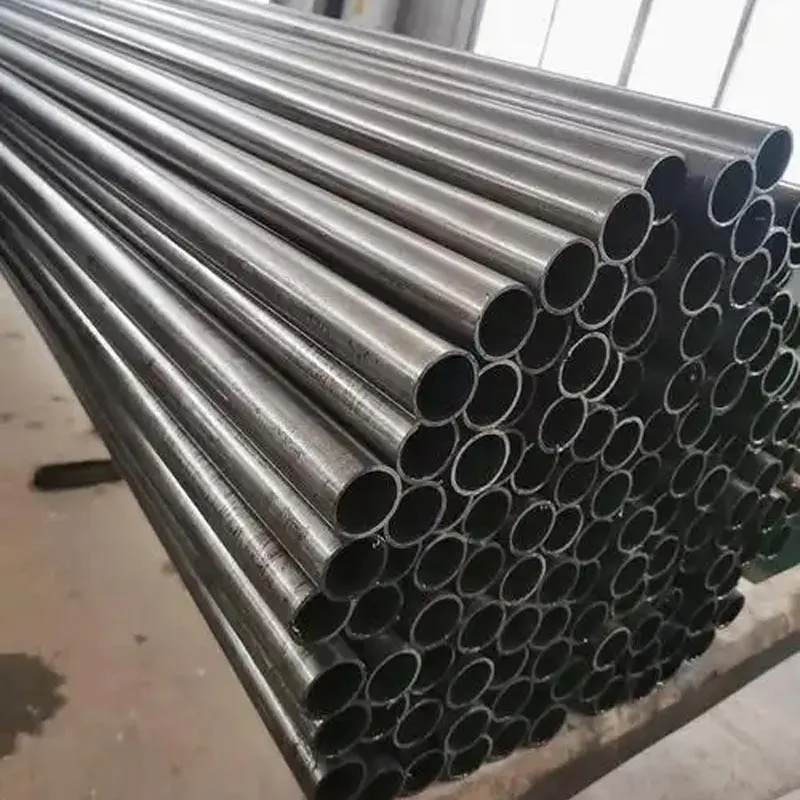
NS3304 Seamless Pipe
NS3304 seamless pipe is a high-performance nickel-based alloy tube manufactured according to GB/T 15007, equivalent to UNS N10276, W.Nr. 2.4819, and Hastelloy C-276. Produced through hot extrusion, the pipe features a fully seamless structure without longitudinal weld seams or heat-affected zones, providing consistent corrosion resistance and mechanical properties throughout the entire tube wall.
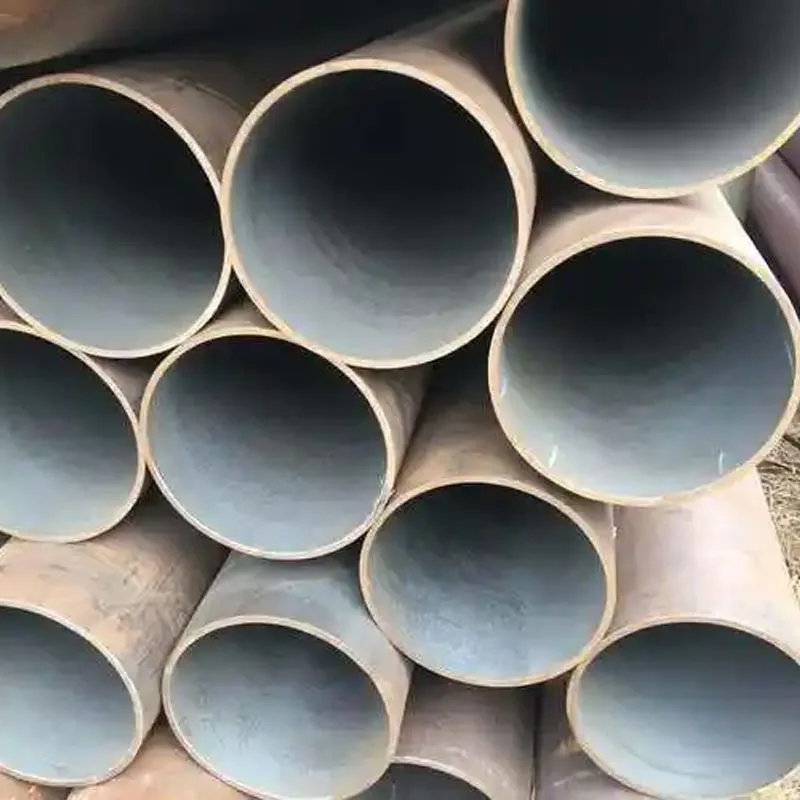
N08031 Nickel Based Alloy Seamless Pipe
For buyers who find 316 stainless steel inadequate and Inconel 718 over-specified, Jiangsu Ji Lai Da Nickel-Based Alloy Co., Ltd. (Ji lai da) introduces the N08031 nickel based alloy seamless pipe — a super-austenitic, solid-solution alloy engineered for the most aggressive mixed-acid and halide environments. Where Inconel 718 excels through precipitation hardening for high-temperature strength, and C276 dominates in reducing-acid service, N08031 (Alloy 31) occupies a unique niche: its balanced 31% Ni / 27% Cr / 6.5% Mo / 1.2% Cu / 0.2% N composition delivers simultaneous resistance to oxidizing and reducing media that defeats both 316 and 904L — and in many sulfuric and phosphoric acid concentrations, even outperforms Inconel 625. As a direct China manufacturer with in-house hot extrusion, Ji lai da offers factory-direct N08031 nickel based alloy seamless pipe with full traceability and competitive pricing. Submit your RFQ for FOB, CIF, or DDP delivery today.
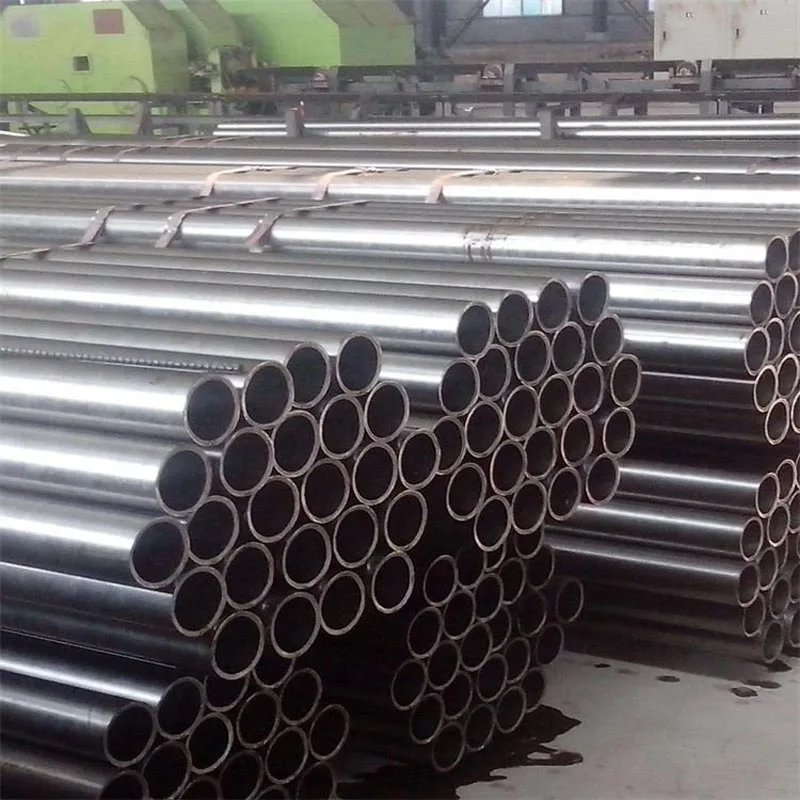
Hastelloy C276 Nickel Based Alloy Extruded Seamless Pipe
Hastelloy C276 nickel based alloy extruded seamless pipe is the flagship product of Jiangsu Ji Lai Da Nickel-Based Alloy Co., Ltd. (Ji lai da) — and for good reason. As the most widely specified nickel alloy in defense, chemical weapons demilitarization, and ultra-aggressive industrial service worldwide, C276 represents both the technical foundation and the commercial core of our business. Every Ji lai da C276 pipe is manufactured through hot extrusion at our own facility in China, achieving ≥ 95% material yield and < 5% loss, with bright internal and external surfaces straight from the extrusion press. Whether you are a defense procurement officer, an EPC contractor for chemical weapons destruction, or a mill-run quality buyer for petrochemical plant construction, Ji lai da delivers factory-direct Hastelloy C276 nickel based alloy extruded seamless pipe with full EN 10204 3.1 certification and FOB / CIF / DDP logistics. This is not a sideline product — this is what we do best.
Where Nickel Alloy Seamless Pipe Goes
The application map for nickel based alloy seamless pipe is defined by what would happen if standard stainless were used instead. Each grade has a failure mode it prevents:
Chlor-alkali plants. Wet chlorine gas and sodium hypochlorite destroy 316L within months. C276 is the standard for chlorine drying towers, hypochlorite coolers, and brine acidification piping. The buyer is a chemical plant EPC or a maintenance procurement team. RFQ specifies ASTM G28 intergranular corrosion testing and EN 10204 3.2 with SGS witness. FOB or CIF to Mundra (India) or Jebel Ali (UAE).
Sour oil and gas. H2S-containing produced water and gas injection lines. NACE MR0175 / ISO 15156 compliance is mandatory. C276 serves high-temperature, high-Cl downhole conditions; N06625 for wellhead piping where temperature cycling is extreme. The buyer specifies H2S partial pressure, CO2 content, and chloride concentration. Documentation must confirm low sulfur and phosphorus in the melt. Middle East buyers dominate - Saudi Arabia, Qatar, UAE - with DDP or CIF delivery.
Pharmaceutical and biotechnology. Reactor coils, clean-in-place piping, and product transfer lines in C276 or N06625 with bright-annealed internal surfaces. The buyer is a cleanroom contractor or a pharma OEM. Surface specification: Ra below 0.8 micrometers internally, electropolished or bright-annealed. Protective end caps and cleanliness certificate required. Low volume, high margin, documentation-heavy. Southeast Asian buyers (Singapore, Malaysia) are active in this segment.
Aerospace and defense. Inconel 718 / GH4169 seamless pipe for hydraulic lines, combustion chamber components, and cryogenic propellant ducting. The procurement cycle is the longest of any buyer type: first-article qualification, lot segregation, supplementary testing, and full traceability from melt to finished product. TUV or Lloyd's witness is standard. The buyer values documentation over price. Delivery is typically DDP to the contractor's facility.
Power generation. Nuclear primary loop auxiliary piping, heat recovery steam generator tubing, and supercritical water-cooled reactor components. C276 and N06625 dominate. The buyer is an EPC contractor with code-level specification requirements - ASME Section III for nuclear, ASME B31.1 for power piping. Every tube must have a paper trail from the original melt chemistry through extrusion parameters to final inspection.
Flue gas desulfurization. N08031 and C276 in FGD scrubber piping where sulfur dioxide and hydrochloric acid condense. The buyer is a coal-fired power plant upgrading environmental controls. Volume is high, grade is typically N08031 for cost efficiency, and the RFQ emphasizes wall thickness and corrosion allowance calculation. Chinese and Southeast Asian power utilities are the primary buyers.
Supercritical water oxidation. HC-22 for the reactor and quench sections of SCWO systems that destroy hazardous waste at 650 C and 250 bar. The conditions are too aggressive for any stainless grade and too oxidizing for C276. HC-22 seamless pipe is low volume but irreplaceable - no other grade survives this service.
What Documentation Accompanies Each Shipment
Every shipment of nickel based alloy seamless pipe from Jiangsu Ji Lai Da Nickel-Based Alloy Co., Ltd. includes:
• Material Test Certificate per EN 10204 (3.1 standard, 3.2 with third-party witness on request)
• Full chemistry analysis (all elements, including trace, traceable to heat number)
• Mechanical test report (tensile, yield, elongation, hardness - longitudinal; transverse added for thick wall above 6mm)
• Dimensional inspection report (OD, WT, length, straightness, eccentricity)
• Surface visual inspection record
• For finished pipe: surface roughness measurement report
• For rough tube: ultrasonic test report per ASTM E213 (if specified in RFQ)
• Supplementary test reports: ASTM G28 intergranular corrosion, ASTM G48 pitting, PMI, hydrostatic (if specified)
• Certificate of Origin
• Packing list with heat number, grade, size, quantity per bundle
Each document carries the heat number that matches the stamp on the pipe. SGS, BV, and TUV inspection available at our facility. ISO 9001 governs the quality system with four additional certifications.
Packing, Shipping, and Lead Time
Finished pipe is packed in wooden crates with end caps and desiccant. Rough tube is bundled in steel frames with wooden dunnage between layers. Each bundle is tagged with heat number, grade, size, quantity, and MTC reference.
Lead time: C276 and N06625 in standard sizes ship in 3 to 4 weeks. HC-22, N08031, and Inconel 718 run 5 to 7 weeks depending on billet availability. Custom sizes or non-standard lengths add 1 to 2 weeks. Qualification batches (20 to 50 meters for first-article approval) can be expedited to 2 weeks.
FOB Shanghai, Ningbo, or Lianyungang. CIF to your destination port. DDP to your warehouse including customs clearance. Factory-direct pricing means no trading-company margin between our press and your dock.
Send Your RFQ
Include the following for a factory-direct quotation within 24 hours:
1. Grade and UNS number (or GOST / EN equivalent)
2. Product form: finished pipe or semi-finished rough tube
3. OD, wall thickness, and length
4. Quantity (total meters or total weight)
5. Surface finish (for finished pipe: pickled, polished, bright-annealed)
6. MTC level: EN 10204 3.1 or 3.2
7. Supplementary testing (ASTM G28, G48, E213, PMI, hydrostatic)
8. Delivery terms (FOB / CIF / DDP) and destination port or address
9. End use (optional but helps us recommend surface finish and flag near-spec chemistry values)